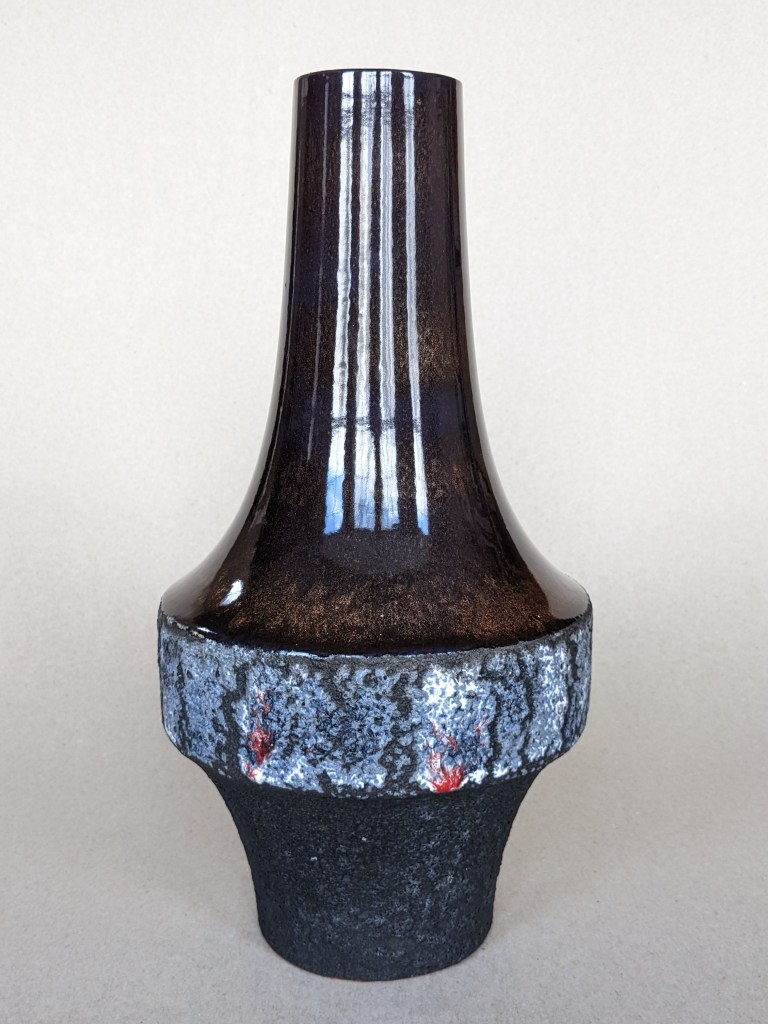
Carstens 1251-33, “Malmö” decor


Mid-century German ceramics represent both joy and frustration in one package. Take this vase, for example. Its’ rather distinctive, rocket-like shape has been attributed to the work of Carstens designer Heinz Siery in roughly 1962, according to Deutsche Keramik author M.P. Thomas. We know it came in a range of sizes, some with handles and all clearly imprinted with a model number. But then… nothing. Was the form name, Malmö, significant in some way? Was the shape inspired by the space race between the USA and the Soviet Union at the time? Did Siery’s wife Ingrid, who was also a ceramics designer at the time, participate in the creation? We simply do not know the answers because most German ceramics in the 60s were created and sold as functional household goods, not celebrated as art — and because the creative process was not valued by the manufacturers, it was not historically preserved. Whether a hangover from the Bauhaus school of the 30s (with its “design should serve society” ethos) or simply German culture, it leaves us in the strange position of knowing what we have in our hand, but not knowing why. This is in stark contrast to Germany’s ceramics contemporaries in Sweden, whose mindset started with the artist, not manufacturing. This approach led Swedish companies to not only prioritize maintenance of records about the creative process, but also place designers in the public eye for interviews and exhibitions — something which provided much needed insight into their work and personal lives. As a result, we are left with a rich history we can enjoy today and one which breathes life into even the plainest Swedish piece. By contrast, though we may be able to easily identify all of Germany’s carefully stamped pieces, the lack of an understanding of the artist behind them leaves each piece a little colder than it should be.
 CeraModerna