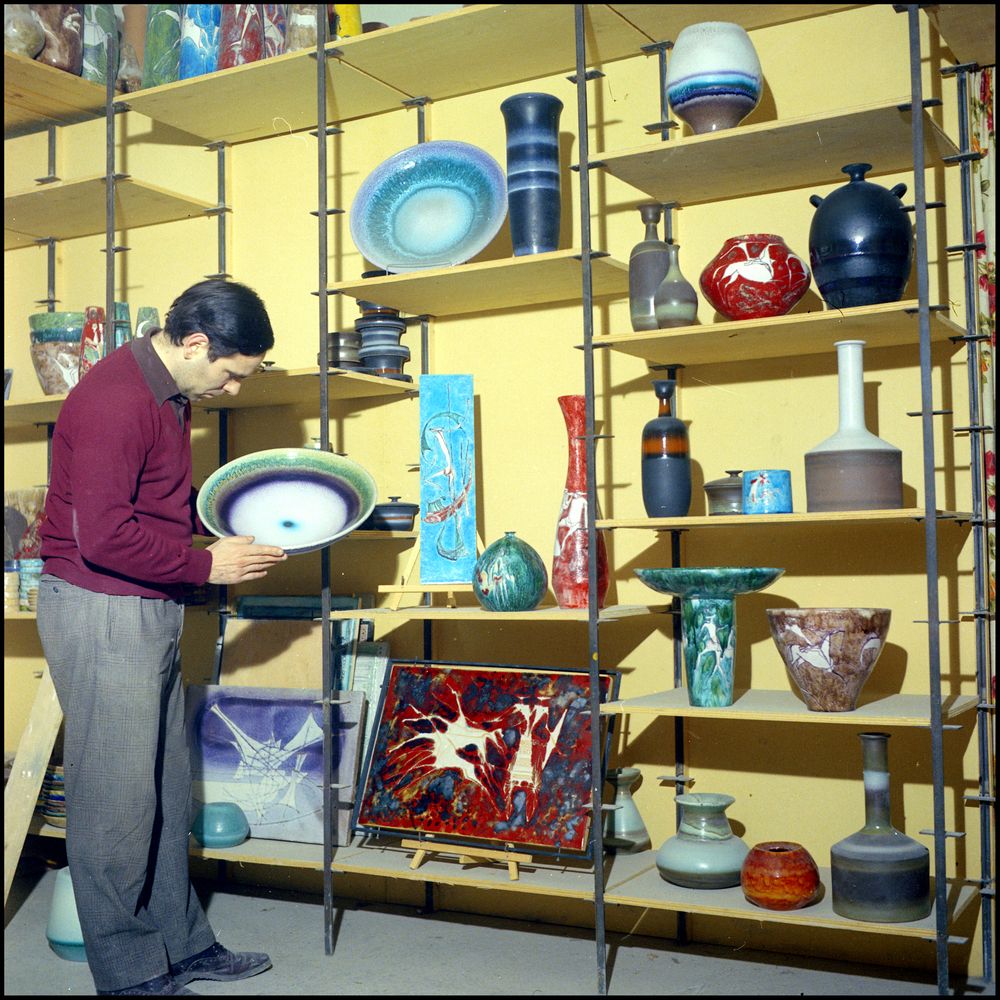
“Il ceramista Guido Baldini, Rimini, 1964” (fotografia di Davide Minghini, ©Biblioteca civica Gambalunga)
Around 10 years ago, I purchased my first piece of pottery by Italian ceramist Guido Baldini, about whom very little was known outside of Europe (and perhaps even Italy). Internet searches yielded only a few images of pieces, sites in Italian mentioning his name, one or two auction results, and the picture above. The picture was the most intriguing to me; not only was it was a rare image of the artist, but it showed the depth and breadth of some of his mid-century work. When I first starting writing about ceramics in 2019, one of my first posts was about Baldini simply because I wanted to share his art with the English-speaking world. While I managed to include a book about him in my post, I neglected to share the image above because I couldn’t find it — whoever had placed it on the internet had removed it. Fast forward to a few weeks ago, when I managed to buy my second piece of his. While going over some of my older research and preparing for this post, I discovered I had saved the image of him on an older computer! As the image had been watermarked by the Biblioteca Gambalunga in Rimini, Italy, I contacted them to request its use and also remove the watermark. They did so graciously, and now everyone can enjoy the image once again.
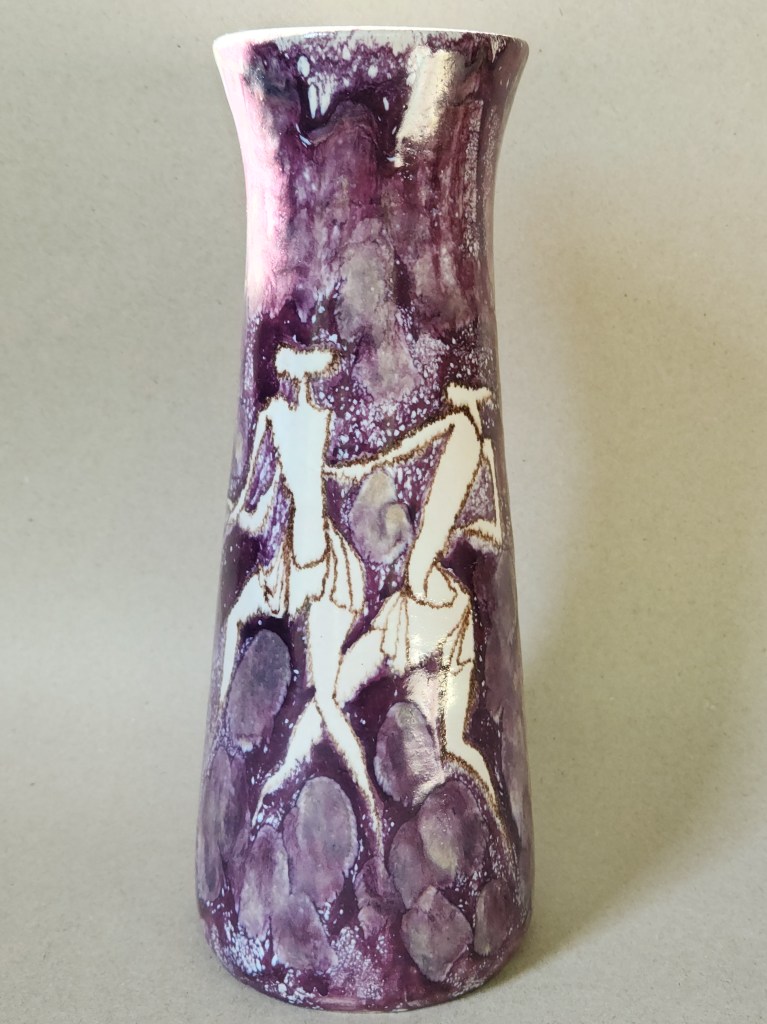
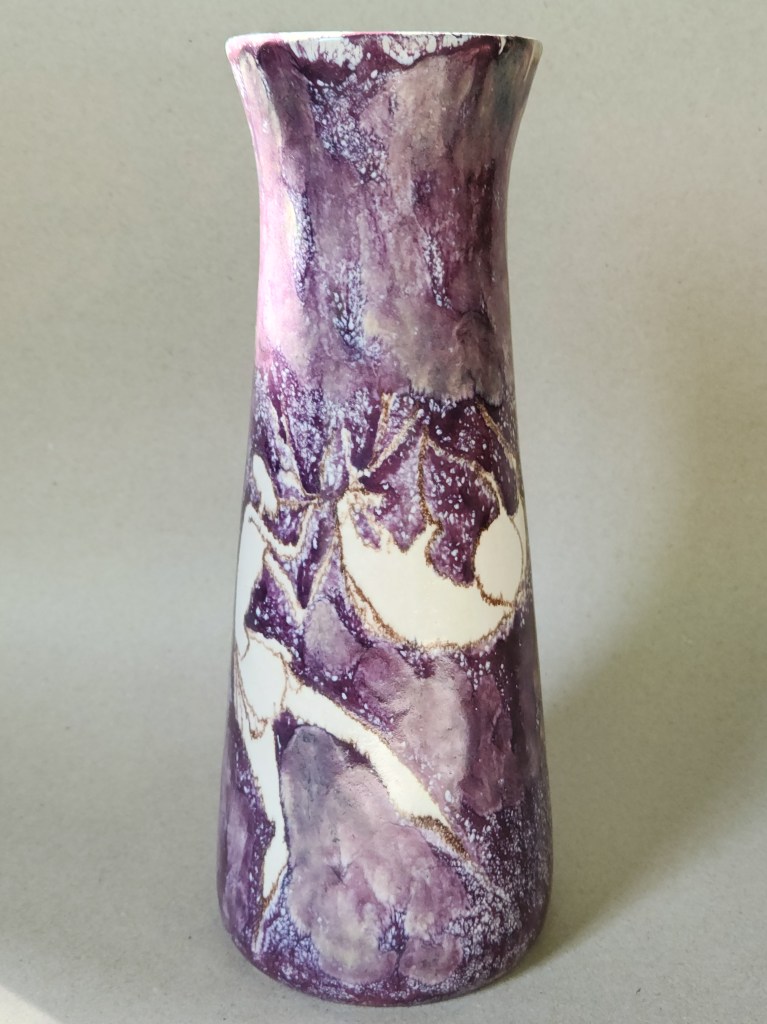
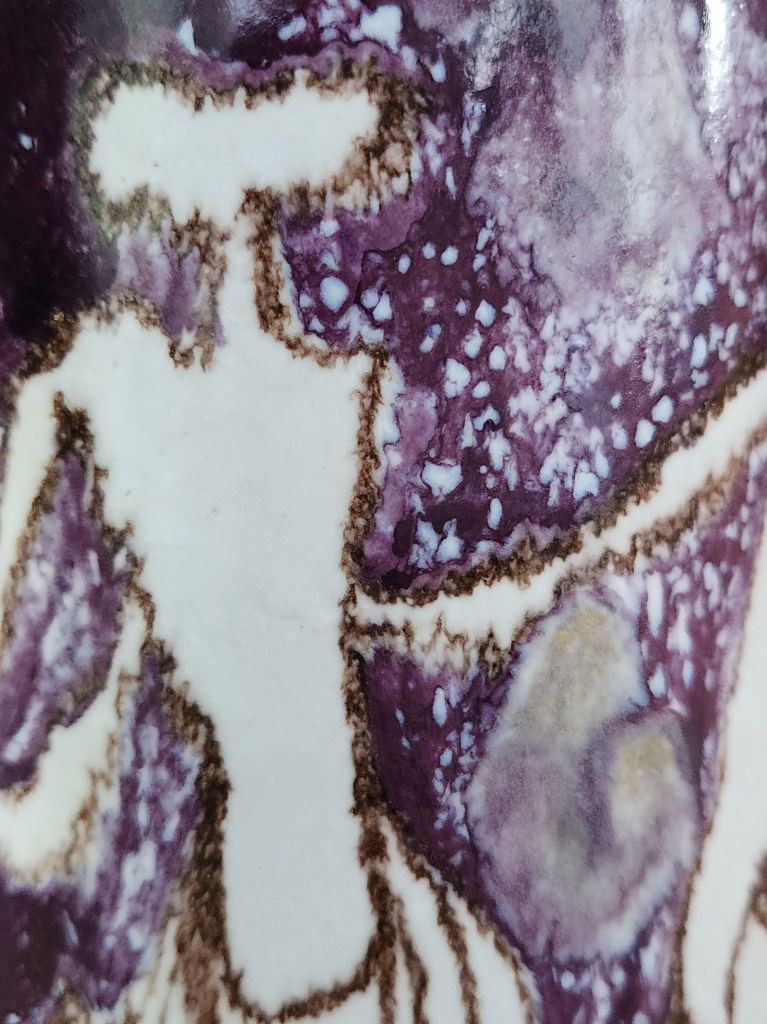

The new piece, like the one in my first post, comes from the late 50s-early 60s when Baldini was primarily decorating using a primitive motif. The treatment of the figures and glaze here, though, is much different from the other piece I own. The earlier, cleaner lines illustrating the warriors are replaced by blurry, watercolor-like lines which interact with the base glaze to give a greater sense of movement. The glaze itself is a flowing mix of poured, spattered and impressed purple-and-white which reminds me of West German glazes of the time, but retains a much higher degree of originality and artistry via the painterly, considered manner in which it is applied. Baldini was known for this: In an undated Italian interview with Vittoria D’Augusto, a Rimini painter and contemporary of Baldini’s, D’Augusto stated Baldini considered ceramics “as a place of high artistic research and not simple craftsmanship.” This piece bears out that approach and highlights why Baldini is deserving of greater appreciation on a scale commensurate with the other mid-century Italian ceramics masters.
 CeraModerna