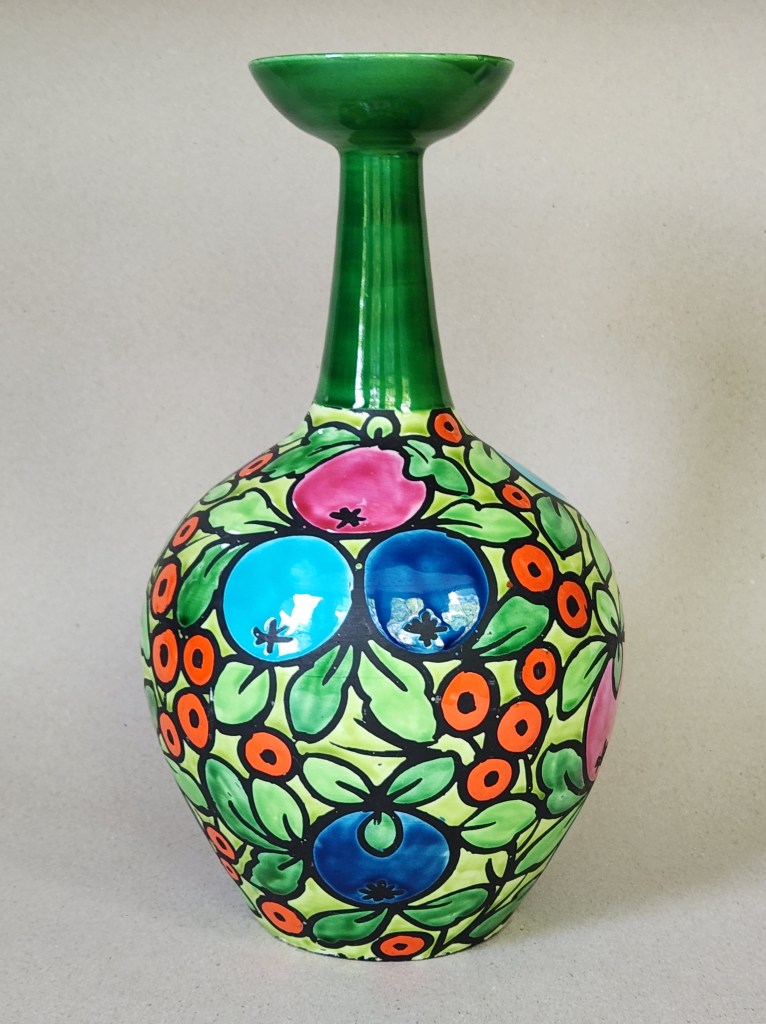
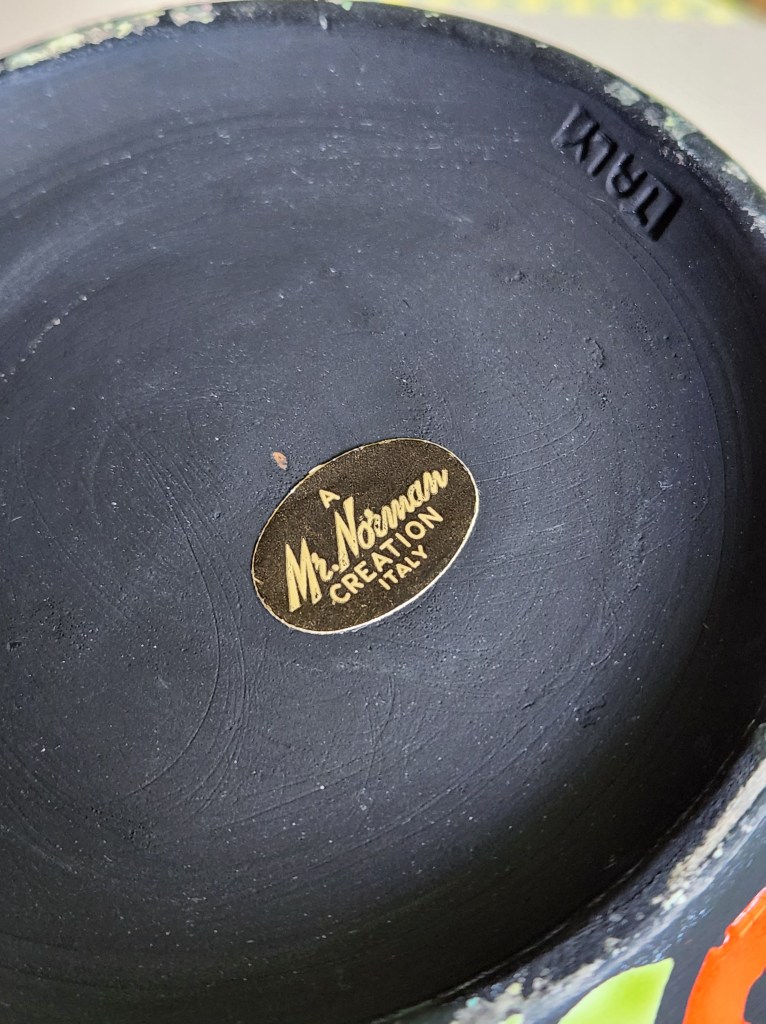
Bagni Ceramiche, prob. 1970s, 40cm
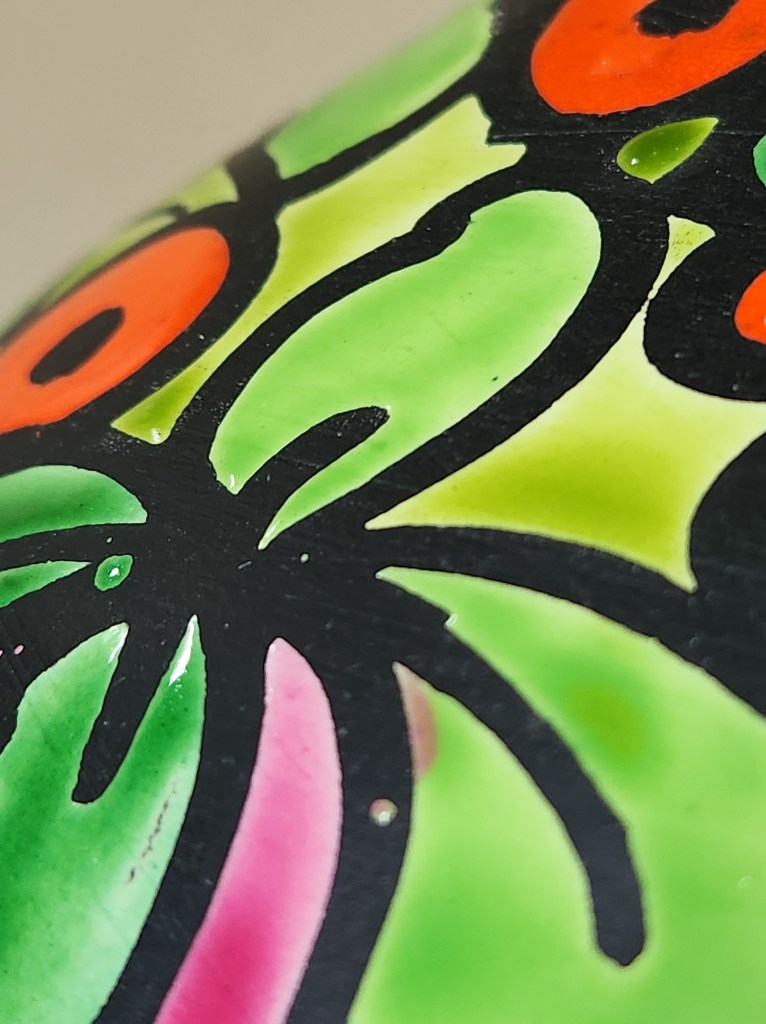

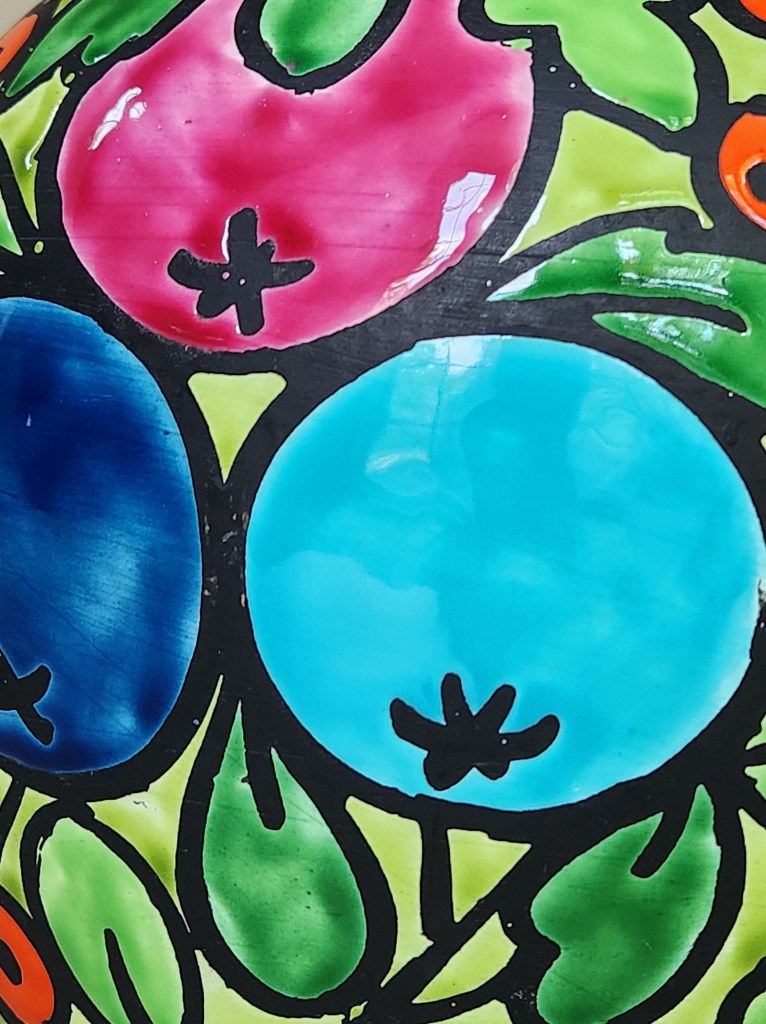
The first known experimentation with pottery occurred 29,000 years ago, and since then there has been millennia of humans working to perfect their ceramics techniques. My flowery friend pictured here was made using the wax resist technique, which was developed for ceramics (after being invented for textiles) over 1,200 years ago. The technique has remained largely the same as it was then: You apply a coat of glaze, paint a wax pattern over it, then apply a second coat of the same or a different glaze. When the vase is fired, the wax resists the second glaze from adhering and the painted design shows through. Although there are Bagni examples of the technique being used for the entire body (even handles!), I prefer his combination of the wax resist body and simple glazed neck here: The dark green contrasts nicely with the green tones below, while at the same time drawing the eye upward to the lip and making the vase seem lighter than its size. The wax resist trend, sadly enough, faded quite a bit after the 1970s and is almost non-existent in mass-produced pottery today. The technique is still used by artisanal potters (as evidenced by the numerous examples on Etsy), so the long tradition continues — although I doubt any of them think of Charlamagne (who was crowned emperor in 800AD) as they fire their kiln!
 CeraModerna