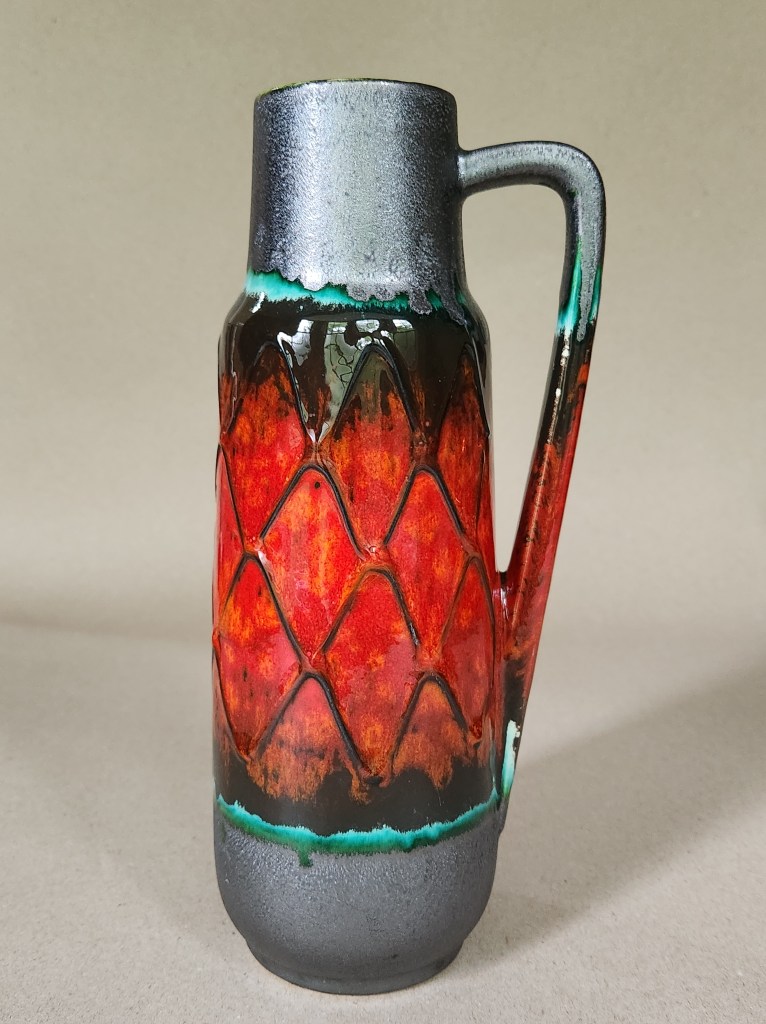
Scheurich 275-28 (28cm)
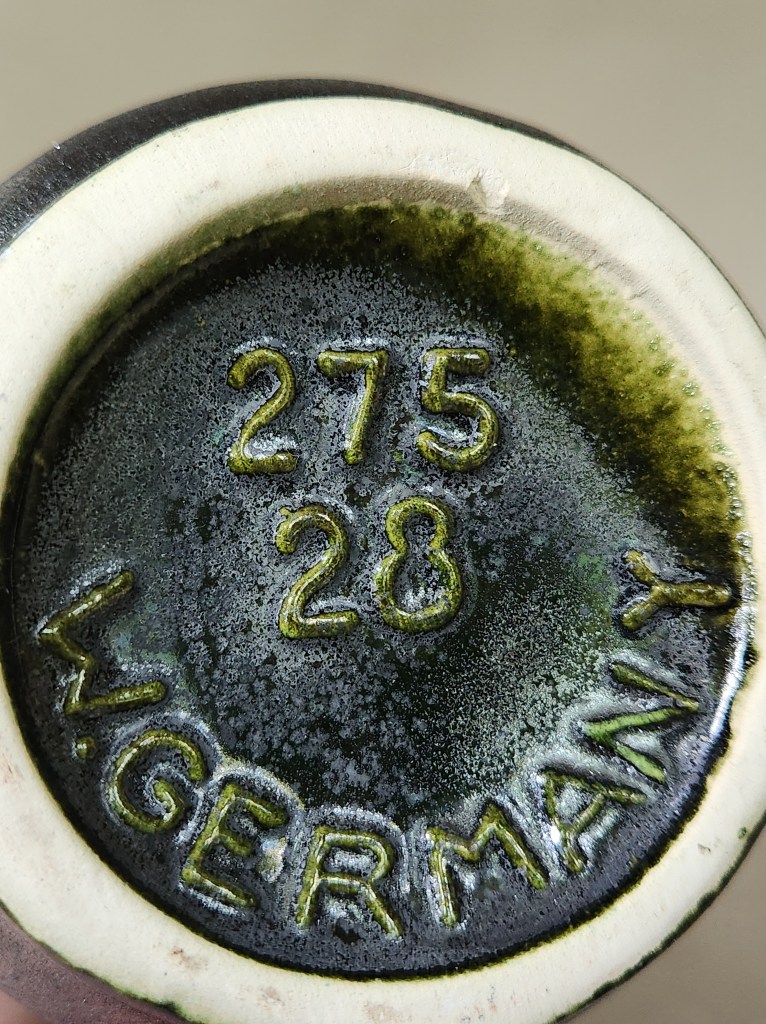
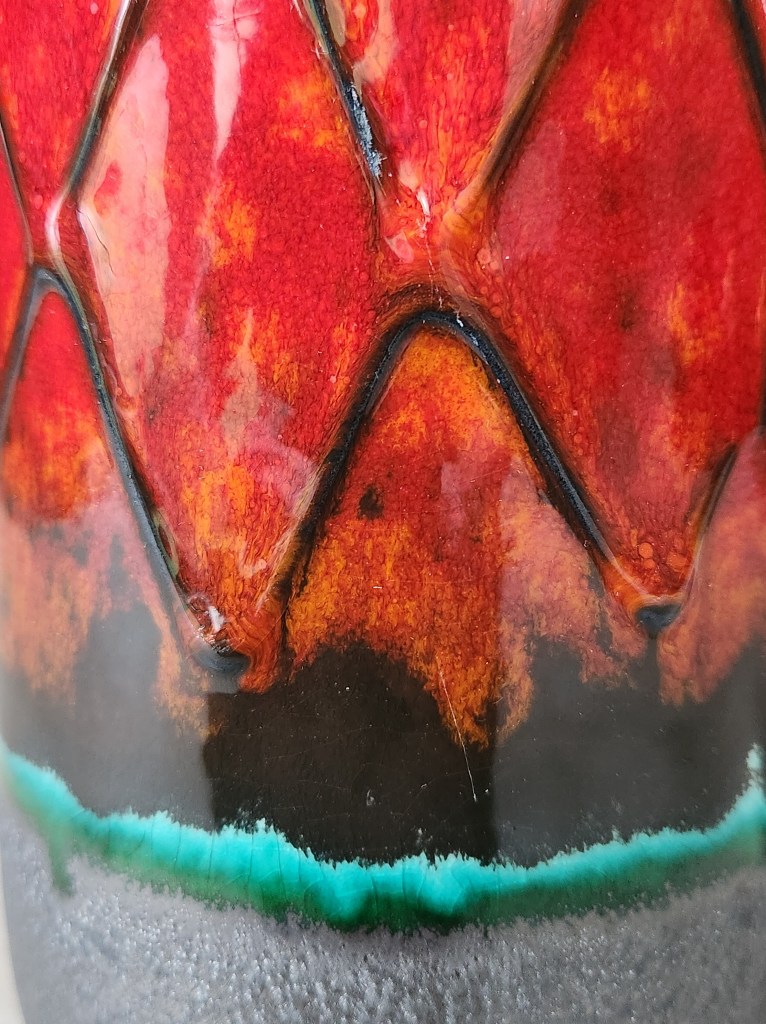
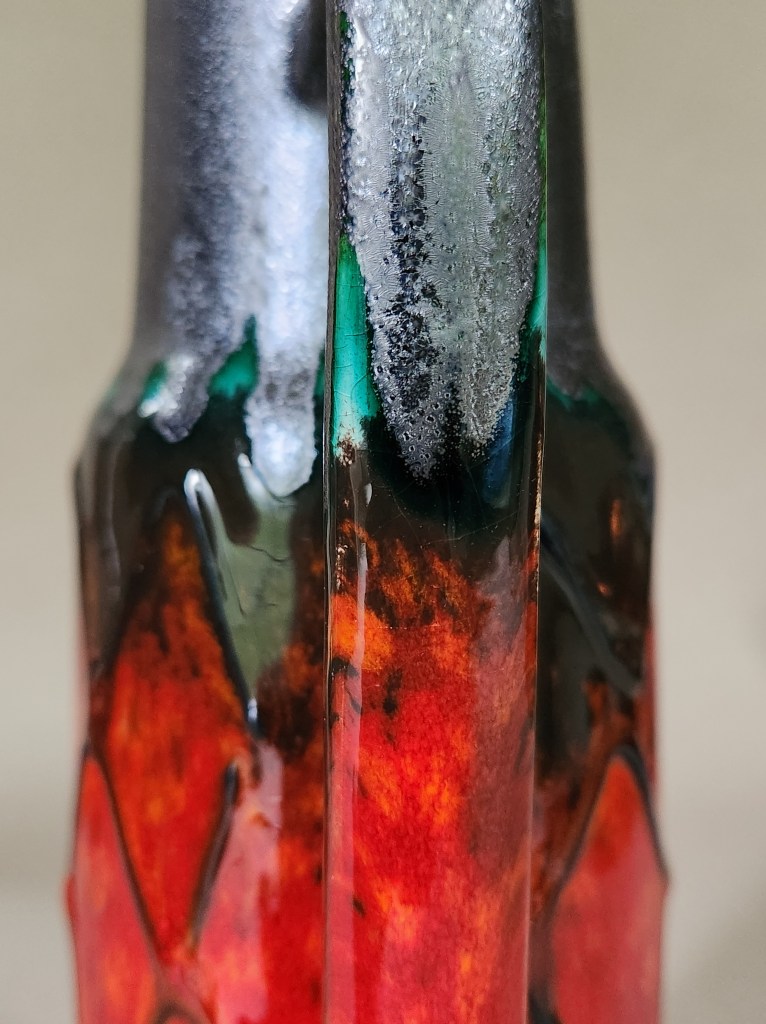
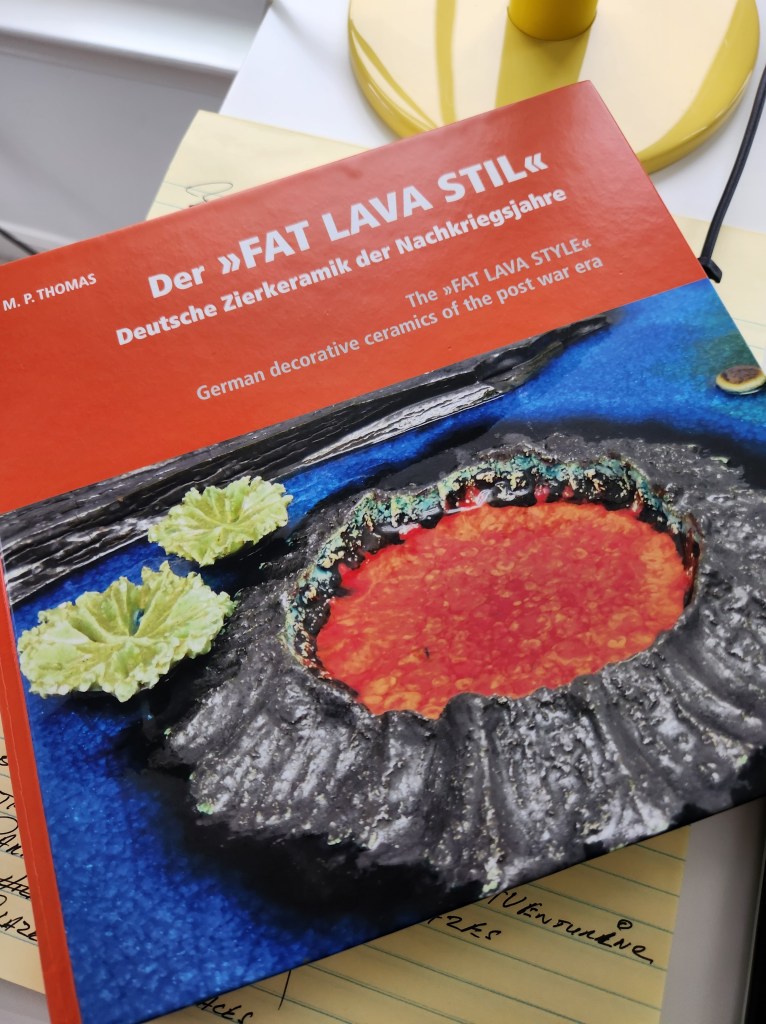
I am embarrassed to admit I do not have the slightest inkling of the science behind ceramics. I can hold a piece and appreciate it for its “universal objective value,” as Roger Scruton would put it, but when it comes to the “how” of it I need an expert. This piece is a classic example. How did Scheurich manage to create such a wildly colorful and layered piece? This is where the West German pottery community is truly lucky: We have German author and collector M.P. Thomas on our side. Thomas is the author of Der “Fat Lava Stil”: Deutche Zierkeramik der Nachkriegsjahre, or The “Fat Lava Style”: German Decorative Ceramics of the Post-War Era. This marvelous 394-page volume covers everything from forms to glazes to designers to ceramics companies — and not only in Germany, but across Europe. It is the true Bible of “fat lava” pottery and for science neophytes like me, an invaluable resource. Getting back to our multi-hued friend here, we can see it was originally glazed a bright green, fired again with the glaze producing the lava-like reddish orange middle, and then fired a third time with the silver glaze applied to the top and bottom. But how did Scheurich achieve the effect found in the middle? The clue is the blackened edges. According to Thomas, when two glazes of similar viscosity are applied on top of each other, the burning process partially mixes the glazes while decomposition simultaneously taints some of the glazes black. Voila! Here is the answer. Thomas’ book is also the key to fully appreciating the value of pieces made in this manner. Thanks to the individual application of the glazes, volatility of the chemicals used, and slight variations of the kiln temperature, this mold-produced, mass-produced vase was guaranteed to have (as Thomas puts it) “a unique character.” What a thought! Perhaps one day we will return to this model of production. Will “complicated” equal “more expensive?” Probably. But any product made that way will be better than the cheap, bland, “Made in China” products littering the shelves of most home goods store I visit these days.

